
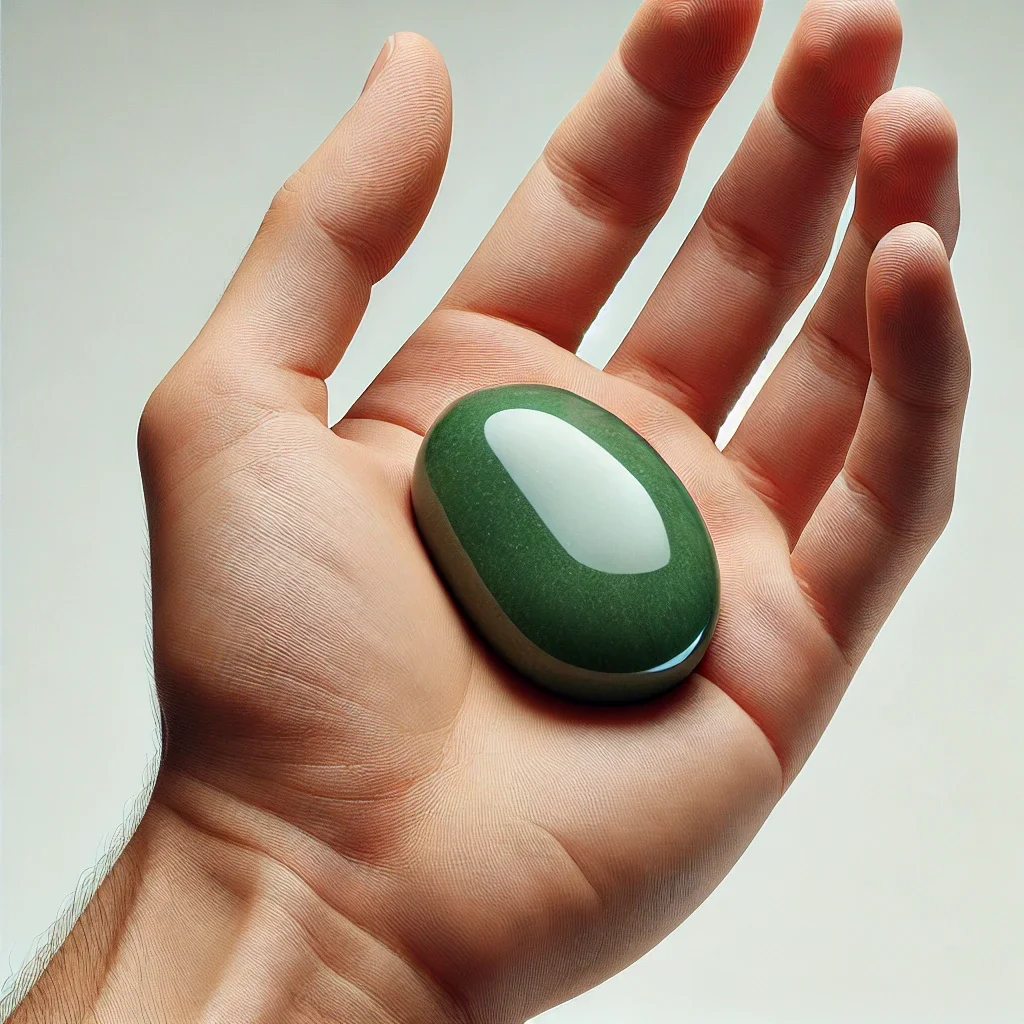
In psychotherapy, effective tools are often simple, portable, and easy to integrate into daily life. One such tool—frequently underestimated because of its simplicity—is the worry stone.
While worry stones are sometimes associated with spirituality or folklore, their clinical value lies elsewhere. Used thoughtfully, they can function as tactile grounding cues that support emotional regulation, reduce anxiety, and help clients generalize therapeutic skills beyond the therapy room.
This article explains what worry stones are in clinical terms, why they can be helpful based on current research, and how clinicians can use them responsibly and effectively.
What Is a Worry Stone—Clinically Speaking?
A worry stone is a small, smooth, handheld object—often oval, sometimes with a thumb groove—designed for repetitive rubbing or squeezing.
In psychotherapy, a worry stone is not a mystical object. It is best understood as:
A portable tactile grounding cue
A somatic anchor for present-moment awareness
A behavioral substitute for maladaptive hand behaviors (e.g., skin picking, nail biting, panic-driven fidgeting)
Because the stone is neutral, discreet, and easy to carry, it allows clients to practice regulation skills in real-world settings where anxiety, cravings, or dissociation actually occur.
It is important to be transparent: there are few direct clinical trials specifically on “worry stones.” Their use is supported instead by adjacent research on tactile grounding, self-soothing touch, and handheld stress or fidget devices. Clinically, this places worry stones in the category of evidence-informed adjunct tools, not standalone treatments.
Why Worry Stones Can Help: Research-Supported Mechanisms
-
Grounding techniques are widely used to interrupt rumination, panic spirals, flashbacks, and dissociation by redirecting attention to present-moment sensory input.
Touch is particularly effective because it is immediate and concrete. A worry stone provides a consistent tactile stimulus that can be paired with orienting language such as:
“I’m here. I’m safe. Notice the texture. Slow the breath.”
Over time, the stone becomes a conditioned cue that supports attentional control and emotional regulation.
-
Research on tactile interventions shows measurable reductions in state anxiety and physiological arousal. Studies examining tactile and multisensory stimulation have found improvements in anxiety scores and autonomic markers.
While rubbing a worry stone is not interpersonal “therapeutic touch,” it is a form of self-administered tactile input, which can help downshift arousal—especially when combined with paced breathing or mindfulness.
-
Experimental research on self-soothing touch suggests it can buffer stress responses, including cortisol-related effects. This does not mean a stone directly changes hormones—but it supports the broader principle that somatosensory self-regulation behaviors influence stress systems.
In practice, the stone serves as a structured, socially acceptable way to engage in self-soothing without avoidance or dissociation.
-
Adults, like children, can benefit from comfort or transitional objects that signal safety and continuity. Research on object attachment shows links to emotion regulation under stress.
A worry stone can function as a micro-transitional object—an anchor associated with therapeutic learning, safety, and coping—especially when it is intentionally introduced and practiced in session.
Practical Ways to Use Worry Stones in Therapy
-
Best for: panic symptoms, anxiety spikes, rumination, cravings, mild dissociation
Name the target state: “Anxiety is at 7/10.”
Contact: stone in dominant hand; thumb in groove.
Orient: name 3 things you see, 2 you hear, 1 sensation in your hand.
Pace: inhale 4, exhale 6 while rubbing the stone.
Re-rate anxiety.
Assign as a between-session micro-intervention.
This fits cleanly within established sensory grounding frameworks.
-
The stone can help prevent covert avoidance (e.g., reassurance seeking) while allowing the client to stay present with the feared stimulus.
Important:
If the stone becomes a safety behavior that blocks fear learning, it should be systematically faded. -
For clients with dissociation or flashbacks:
Pair the stone with a scripted orientation (date, location, age, safety).
Keep the routine consistent: same stone, same pocket, same sequence.
Use it as an anti-dissociation cue, not a distraction.
-
Cravings rise and fall. A worry stone can act as a competing response while the client practices urge surfing, breath regulation, and mindful labeling.
Indications, Cautions, and Contraindications
Most helpful when:
Clients benefit from somatic regulation
Portable coping is needed between sessions
Body-focused repetitive behaviors are present
Use caution when:
The stone becomes compulsive (OCD spectrum)
It functions as a safety behavior during exposure
Symbolism encourages magical thinking rather than skill use
Avoid or adapt when:
The object is trauma-linked
There is choking or ingestion risk (use larger alternatives)
Tips That Improve Clinical Effectiveness
Condition it in session: First use during successful regulation.
Measure outcomes: Quick pre/post anxiety ratings.
Plan for fading: Especially during exposure work.
Offer options: Smooth stones, textured coins, beads—match sensory preference.
What “Evidence-Informed” Really Means Here
Direct worry-stone RCTs: Minimal to none.
Best support: Robust research on tactile stimulation, grounding, self-soothing touch, transitional objects, and handheld stress devices.
Clinical conclusion: Worry stones are a low-risk, skill-supporting adjunct, not a standalone treatment.
When framed clearly and used intentionally, worry stones can help bridge the gap between insight gained in therapy and regulation practiced in real life—where it matters most.
-
Ozen N. Effects of using a stress ball on anxiety and depression… (2023, PubMed).
Yüksel D. Stress ball application during angiography decreased anxiety and pain (2024, PubMed).
Şahan S. Stress ball effects on comfort and anxiety in hemodialysis patients (2025, PDF).
Xie J. Tactile and olfactory stimulation reduce anxiety… (2025, PMC).
Packheiser J. et al. Systematic review/meta-analysis of touch interventions (2024, Nature Human Behaviour).
Dreisoerner A. et al. Self-soothing touch and being hugged reduce cortisol… (2021, PMC).
Hammond J. Building an operational definition of grounding (2025, SAGE).
Haynes AC. et al. Design/validation of a tactile aid to ease anxiety (2022, PLOS ONE).
Ko CH. et al. Transitional object attachment and emotion regulation under stress (2024, PMC).
(Reference list is provided to support further reading; inclusion does not imply that any single study directly tests “worry stones” as a standalone psychotherapy intervention.)